

Can orthodontic treatment disguise a congenitally missing lateral incisor in Warragul?
Case Note ID: DTLE-Nov2024-ROX
Location: Dentélle by WDC (Warragul, Gippsland)
Primary Treatments: Invisalign with Canine Substitution, Professional Whitening
Supporting Technology: Digital Treatment Planning, Dental Monitoring (Virtual Check-ups), Professional Whitening Systems
Smile Assessment
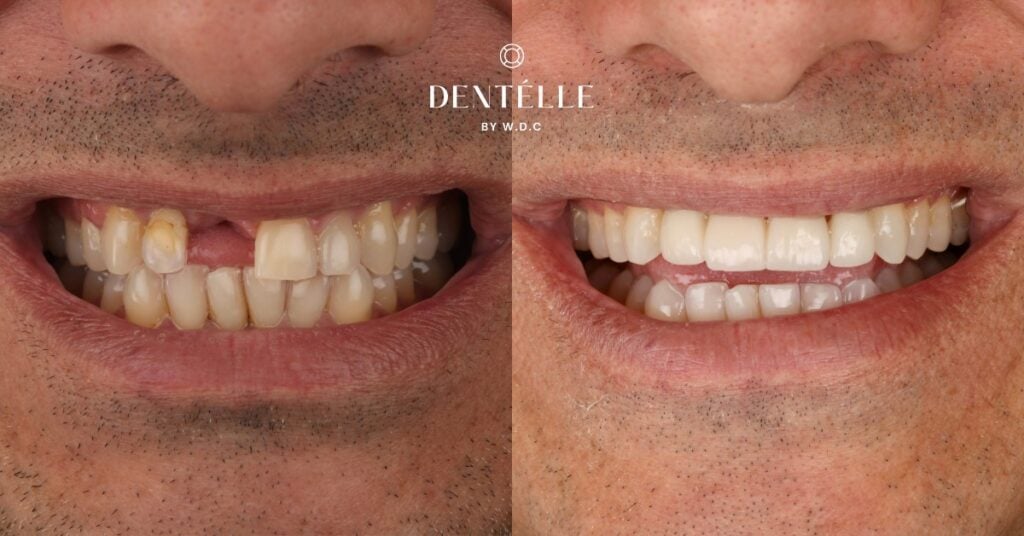
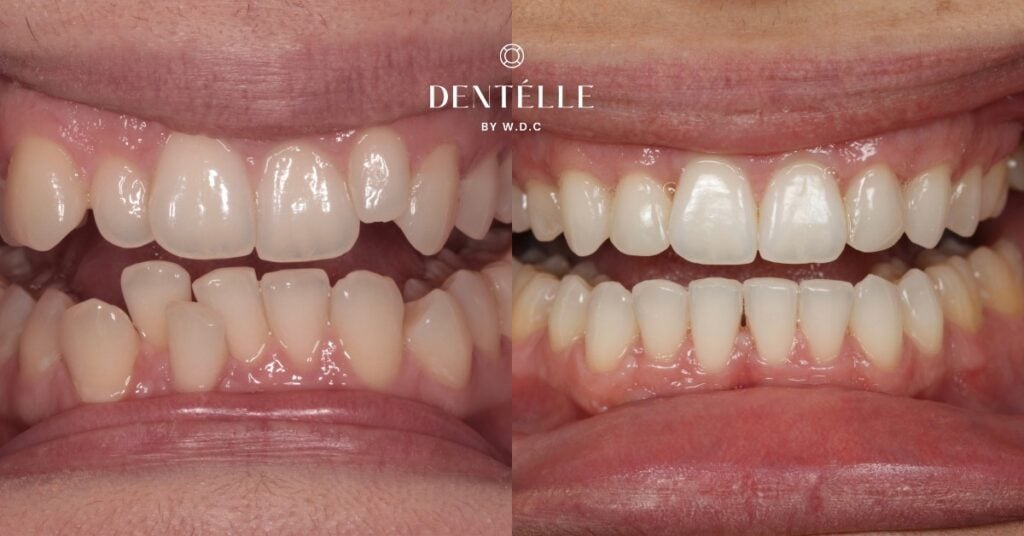
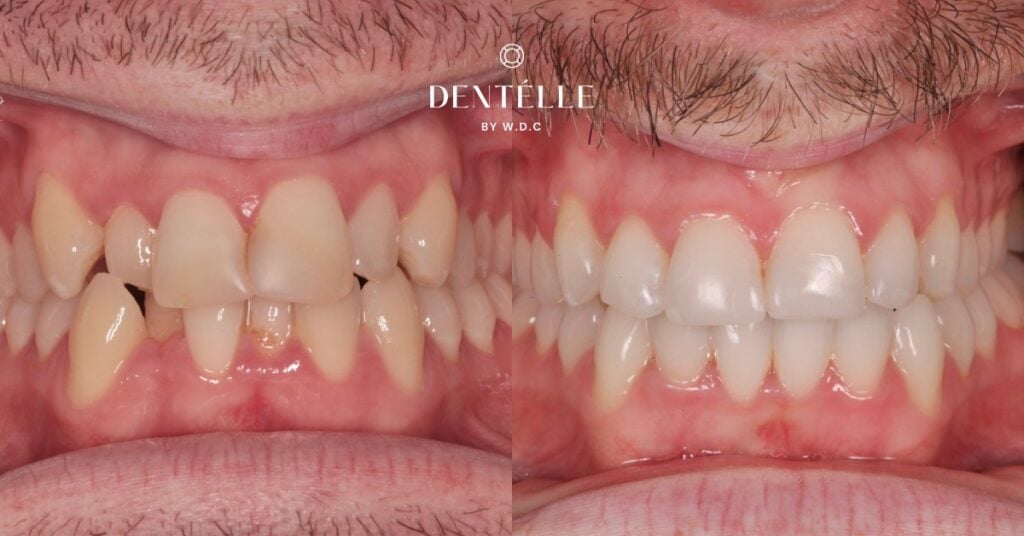
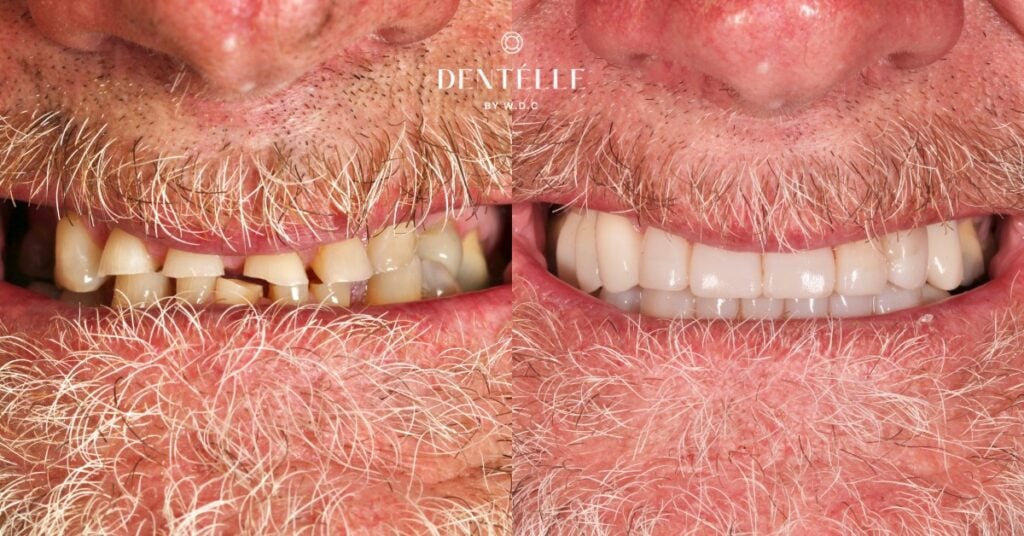
A patient presented with a congenitally missing lateral incisor seeking orthodontic camouflage to create more symmetrical smile appearance.
- Congenitally Missing Lateral Incisor: Adult tooth never developed, creating asymmetry in anterior region
- Gap from Missing Tooth: Space affecting smile symmetry and appearance
- Canine Positioning: Adjacent canine requiring repositioning to fill lateral incisor space
- Aesthetic Enhancement Goals: Seeking balanced smile appearance through orthodontic space closure
The patient’s goals centred on creating a more symmetrical smile by moving the canine into the missing tooth space and reshaping it to appear more like a lateral incisor. Following consultation with Dr Mira and our team, an orthodontic camouflage approach was planned.
Bespoke Treatment Design & Artistry
An orthodontic substitution strategy was designed to disguise the missing tooth through strategic tooth movement and aesthetic enhancement.
Phase 1: Digital Treatment Planning with Dr Mira
Comprehensive assessment established the feasibility of canine substitution for the missing lateral incisor. Digital planning mapped the movement required to close the gap and position the canine in the lateral incisor location. Our Patient Concierge coordinated the treatment phases and monitoring protocols.
Phase 2: Invisalign Treatment with Dental Monitoring
Custom clear aligners progressively moved the canine into the lateral incisor space whilst adjusting adjacent teeth to maintain proper relationships. Dental Monitoring technology enabled virtual progress tracking through smartphone technology, providing flexibility between in-person visits. The remote monitoring system allowed close oversight whilst reducing appointment frequency.
Phase 3: Aesthetic Refinement
Following orthodontic completion, professional whitening brightened the smile to complement the newly aligned teeth. The whitening enhanced overall aesthetics and created fresh, bright appearance across all visible surfaces.
Phase 4: Retention & Maintenance
Custom retainers were provided to maintain achieved tooth positions. The canine, now functioning as a lateral incisor substitute, requires consistent retention to preserve its new position.
Aesthetic Outcome
The orthodontic treatment successfully closed the gap from the missing tooth and repositioned the canine to create improved symmetry. Combined with whitening, the approach provided aesthetic enhancement without requiring implant or bridge placement.
Results vary. Canines are larger than lateral incisors, so appearance improves but may not look identical. Retainers required. Whitening longevity varies.
Frequently Asked Questions for Warragul Patients
What causes a tooth to be congenitally missing?
Congenitally missing teeth occur when the adult tooth never develops. The most commonly missing teeth are upper lateral incisors and lower second premolars. This happens during tooth formation before birth and isn’t caused by anything you did. It’s a variation in dental development that affects some people.
Why substitute a canine instead of using an implant?
Canine substitution uses orthodontics to move your natural tooth into the gap, avoiding the need for surgery or implant placement. This approach preserves natural tooth structure and can be less invasive. However, canines look slightly different from lateral incisors, so the appearance is improved but may not be identical. We’ll discuss which approach best suits your situation.
Can a canine really look like a lateral incisor?
The canine can be repositioned to fill the space and create improved symmetry. Canines are typically slightly larger and more pointed, so the result improves appearance but may not look identical to a natural lateral incisor. Some patients later add minor reshaping or cosmetic bonding to refine the appearance further. We’ll show you what to expect during treatment planning.