Overdentures
Overdentures at Dentélle offer you the freedom to smile and eat confidently while giving a stunning natural-looking smile that you can be proud to show off.


Restoring function and appearance at Dentélle by WDC
Medically reviewed by Dr Mira Azarcon, Dentist ·

At Dentélle by WDC, we understand how missing or damaged teeth can affect your oral health and daily function. Our Dental Crowns and Bridges are a considered option to restore your smile’s function and aesthetics. Whether you need to strengthen a damaged tooth or replace missing teeth, our experienced team is here to help you explore your options.
Disclaimer: This Image is for illustrative purposes only. Individual results and patient outcomes may vary.
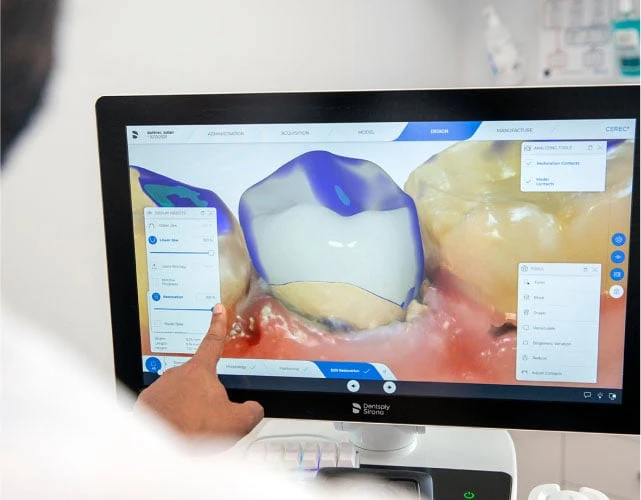
Dental crowns, often referred to as caps, are custom-made restorations designed to cover and protect a damaged tooth. Made from high-quality materials such as porcelain, ceramic, or metal, crowns provide strength, durability, and a natural appearance. They may be a suitable option for restoring teeth that are broken, worn down, or severely decayed. Results vary. Individual assessment required.

Dental crowns offer a number of advantages, which is why they’re a popular treatment choice:

Disclaimer: This Image is for illustrative purposes only. Individual results and patient outcomes may vary.
Dental bridges are used to replace one or more missing teeth. They consist of one or more artificial teeth (pontics) anchored by crowns on adjacent natural teeth or dental implants. Bridges address the gap created by missing teeth, working toward restoring your smile’s function and appearance. Results vary. Individual assessment required.
Dental bridges offer several advantages, making them a considered option for replacing missing teeth:

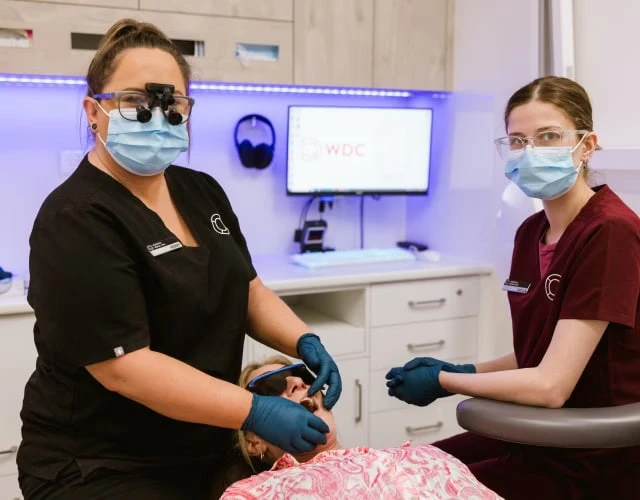
Your treatment begins with a comprehensive consultation at Dentélle by WDC. During this visit, our experienced dentists will evaluate your dental health, discuss your needs, and determine a suitable treatment plan for you. We’ll take digital impressions, photographs, and X-rays to create a precise treatment plan tailored to you.

For dental crowns, we’ll prepare your affected tooth by removing any decay and reshaping it to accommodate your crown. For dental bridges, the adjacent teeth (abutments) will be prepared to support your bridge. This process ensures a proper fit.

Using the digital impressions, our experienced dentists will design your custom crown or bridge. The restorations will be crafted to match the colour, shape, and size of your natural teeth, working toward a natural-looking result.

While your permanent crown or bridge is being fabricated, you’ll have temporary teeth fitted to support function while you wait. This lets you continue your daily activities during the fabrication period.

Once your custom crown or bridge is ready, you’ll return to Dentélle by WDC for the final placement. Our dentists will make any necessary adjustments before permanently bonding your restoration in place. Results vary. Individual assessment required.
Crowns and bridges restore damaged or missing teeth, but like any restorative treatment, they come with risks and recovery considerations.
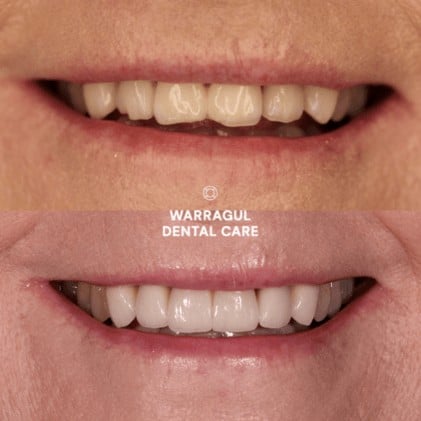
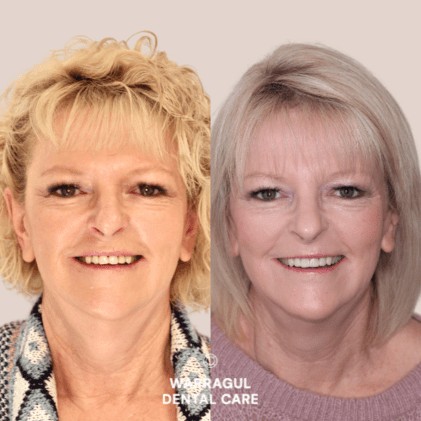
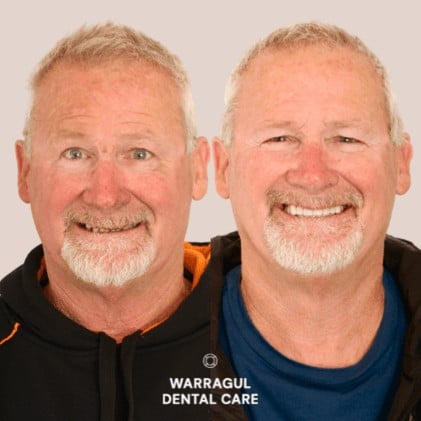
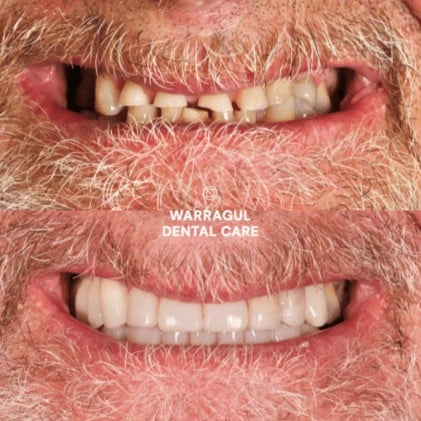
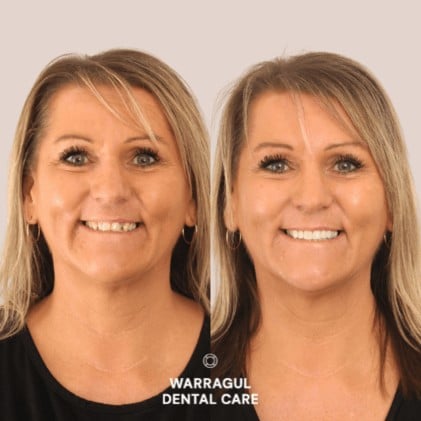
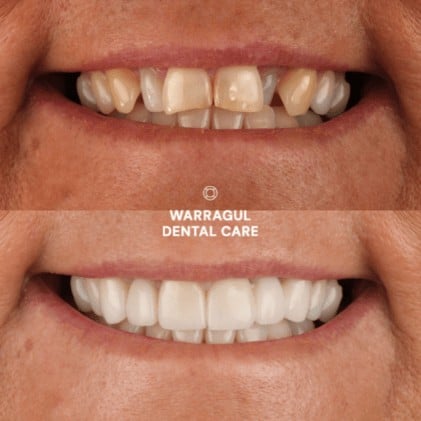
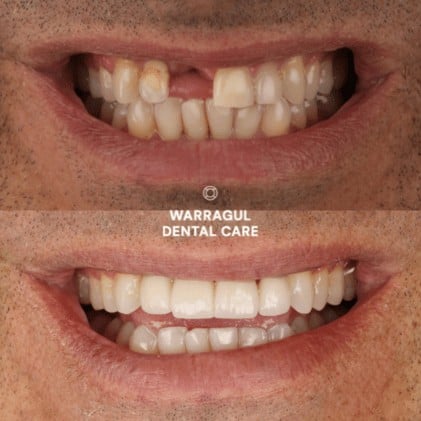
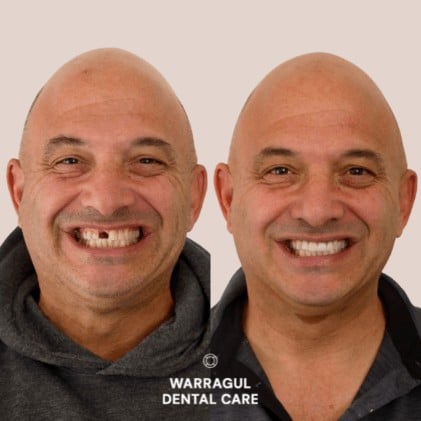
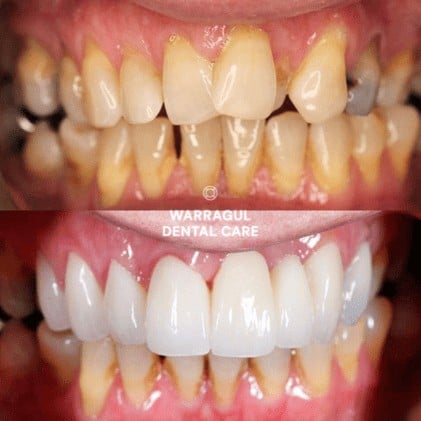
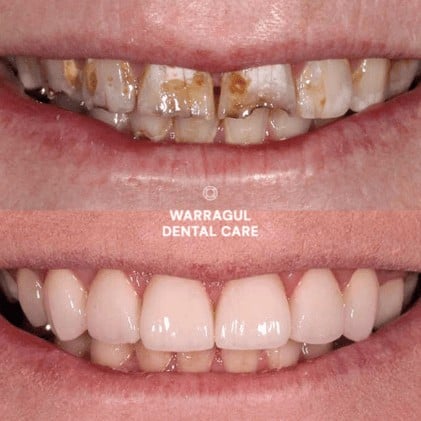
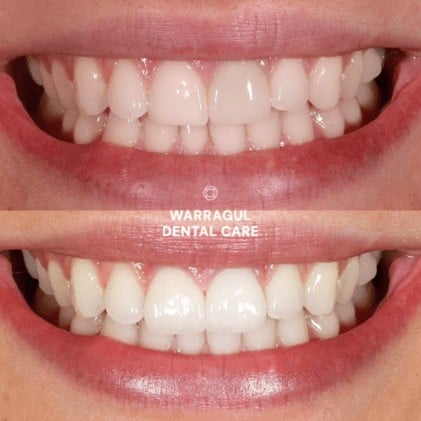
Take a peek at some smile results from our Dentélle clients.
Warning: The ‘before’ and ‘after’ images shown are of a real patient of our clinic. These images are for illustrative purposes only and do not represent the results that all patients can expect. Results vary depending on individual circumstances, and all surgical and cosmetic procedures carry risks.
Dental Crowns and Bridges may be suitable for a wide range of dental needs, including:
During your consultation, our experienced dental team will assess your specific needs and determine if Dental Crowns and Bridges are a suitable option for your dental restoration.

Download
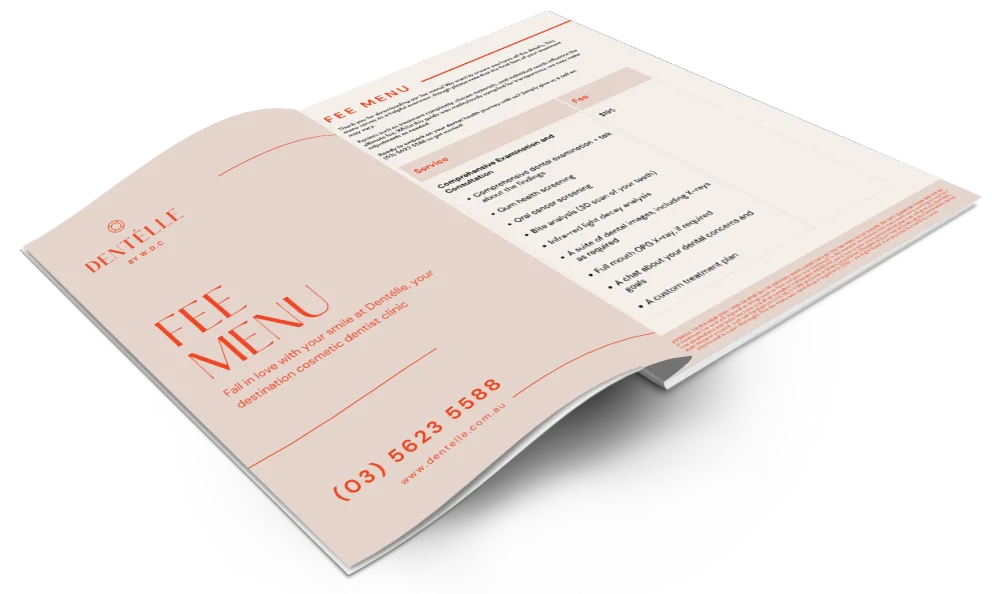
We believe in transparency and affordability. Download our fee menu to learn more about our competitive rates and the various dental services we offer.
Our pricing is designed to ensure that high-quality dental care is accessible to everyone in the Warragul and Gippsland communities.
Caring for your dental crowns and bridges involves similar steps to caring for your natural teeth. Here are some tips to keep them in good condition:
We believe everyone deserves access to quality dental care. That’s why we offer flexible financing and payment options to fit your budget, including:
Our friendly team will help you explore the best payment and financing options to make your dental care accessible.
Overdentures at Dentélle offer you the freedom to smile and eat confidently while giving a stunning natural-looking smile that you can be proud to show off.

Find the freedom to eat, speak and smile with confidence again If you’re missing multiple teeth or struggle with loose, ill-fitting dentures, All-on-X implants dental implants offer a long-term solution. They magically restore your ability to eat, speak and smile the way you used to, making you feel younger and ready to live life to…

Missing teeth don’t just create cosmetic gaps, but functional deficits too - impeding eating enjoyment and self-confidence. Dental implants offer the ideal tooth replacement solution by securely fusing artificial titanium roots to your jawbone for seamless, stable support of new teeth. Regain your carefree vitality to dine on your favourite food and smile unreservedly again.

CEREC crowns in one visit at Warragul Dental Care Need a damaged tooth restored securely, beautifully…and quickly? We’ve got your back.

We’re one of the few clinics in the Warragul and Gippsland area to offer in-clinic general anaesthetic, so you can gently fall asleep while we care for your teeth. You won’t even know treatment is taking place and before you know it, it'll be time to wake up and your treatment will be complete.
Crowns and bridges are long-lasting, but they may chip, loosen, or develop decay at the margins. Regular check-ups and good oral hygiene are essential to protect them.
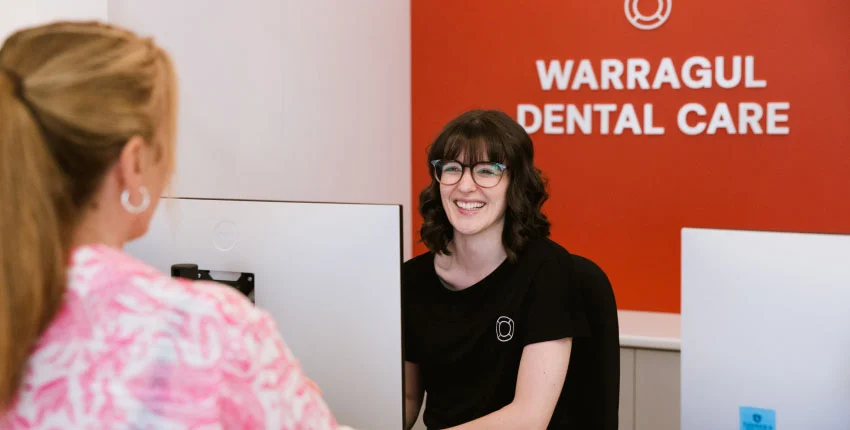
Ready to explore Dental Crowns and Bridges? Contact Dentélle by WDC today to book your Cosmetic Smile Consultation. Call us at (03) 5614 8899, chat with us online, or book an appointment through our website. Our team is here to help you explore your options.
Disclaimer: The material posted is for informational purposes only and is not intended to substitute for professional medical advice, diagnosis or treatment. Results vary with each patient. Any dental procedure carries risks and benefits. If you have any specific questions about any dental and/or medical matter, you should consult your dentist, physician or other professional healthcare providers.
Stories, expertise, and a closer look at what we do