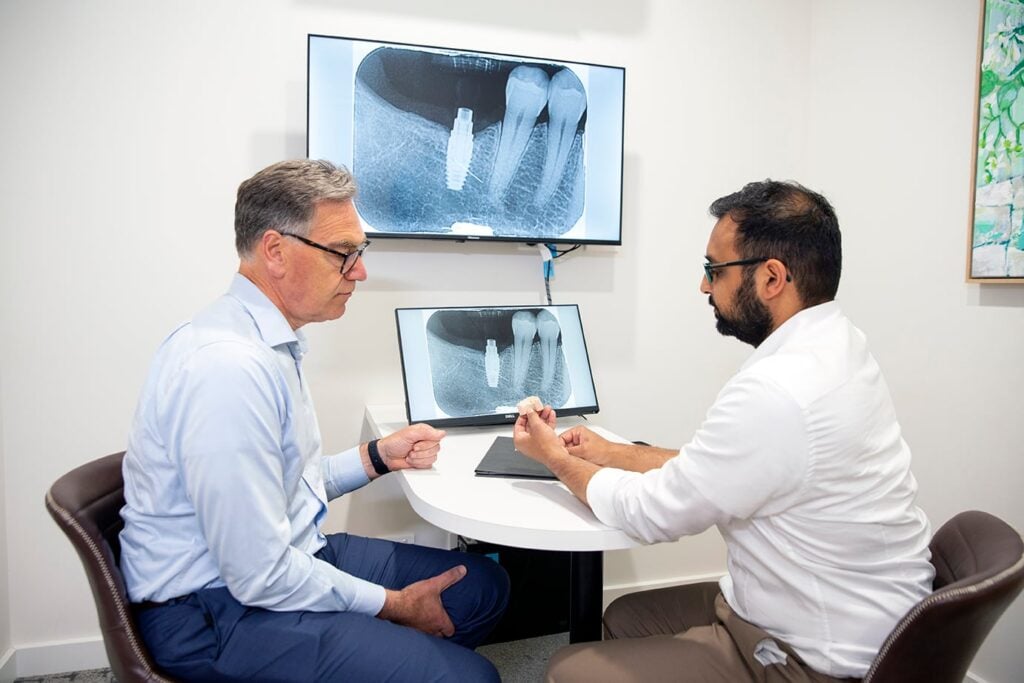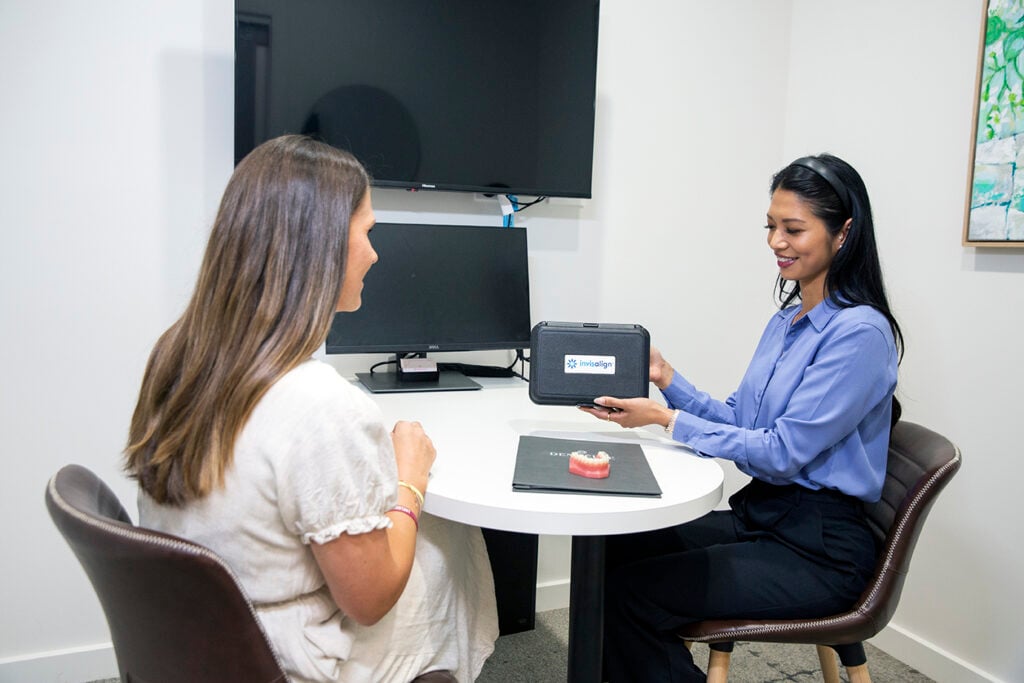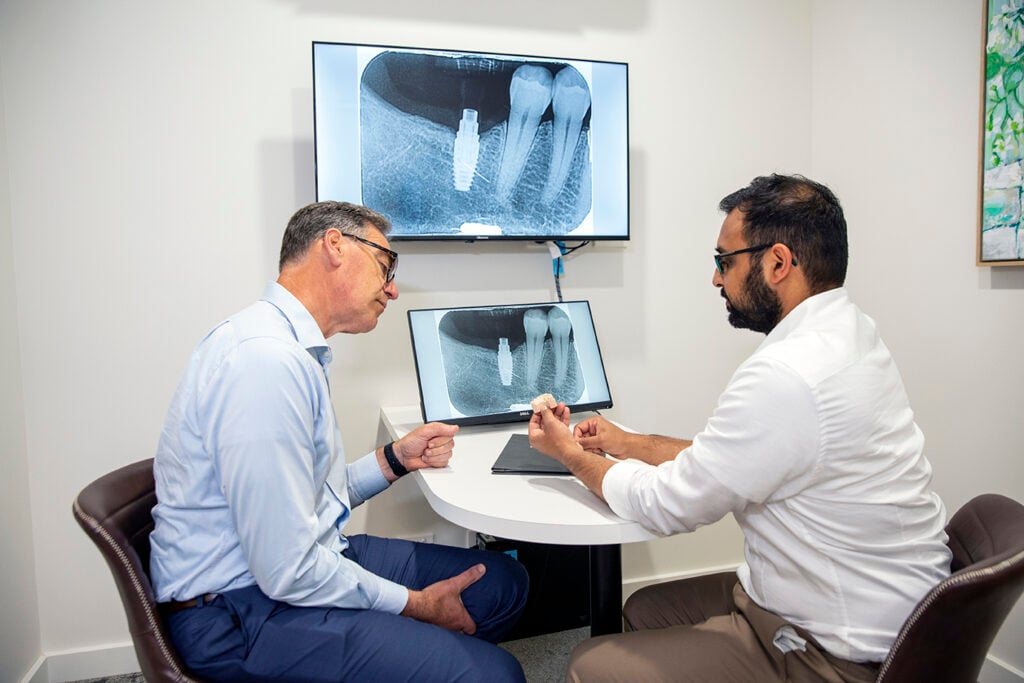

Dr Anand at Warragul Dental Care, home of Dentelle, manages complex full mouth cases for patients across Warragul and the broader Gippsland region, including patients whose dental health has been significantly affected by long-term smoking. Understanding what the options are once teeth have become unsalvageable is an important first step, and Dr Anand takes the time to walk each patient through the clinical picture, the available pathways, and what each one involves in terms of process, timeline, and cost.
How Smoking Damages Teeth and Gums
The Effect of Long-Term Smoking on Bone and Gum Tissue
Smoking has a well-documented and destructive effect on gum health. Over years of exposure, the chemicals in cigarette smoke impair blood flow to the gum tissue, suppress the immune response, and accelerate the breakdown of the bone that surrounds and supports the teeth. Patients who have smoked for extended periods often present with significant bone loss, gum recession, and teeth that have progressively become loose as the supporting structures deteriorate beneath them. Abscesses are also common as the compromised tissue becomes less able to fight infection effectively.
When Extraction Becomes the Only Option
There comes a point where the remaining teeth are no longer salvageable and extraction is the most appropriate clinical decision. This is not a failure of treatment but a recognition that the damage to the supporting bone and gum tissue has progressed beyond what can be restored. Once extraction is the agreed path forward, the clinical conversation shifts to how teeth will be replaced and how function will be restored through dental implants or other options.
Your Tooth Replacement Options
Conventional Removable Dentures
The most straightforward replacement option following full extraction is a conventional removable denture. These are taken out at night and cleaned separately from the mouth. For patients who are not suitable for implants due to bone volume or other clinical factors, dentures remain a functional option. However, they do not provide the same stability as implant-supported restorations and can feel less secure during eating, particularly in the lower jaw.
Implant-Supported Fixed Teeth
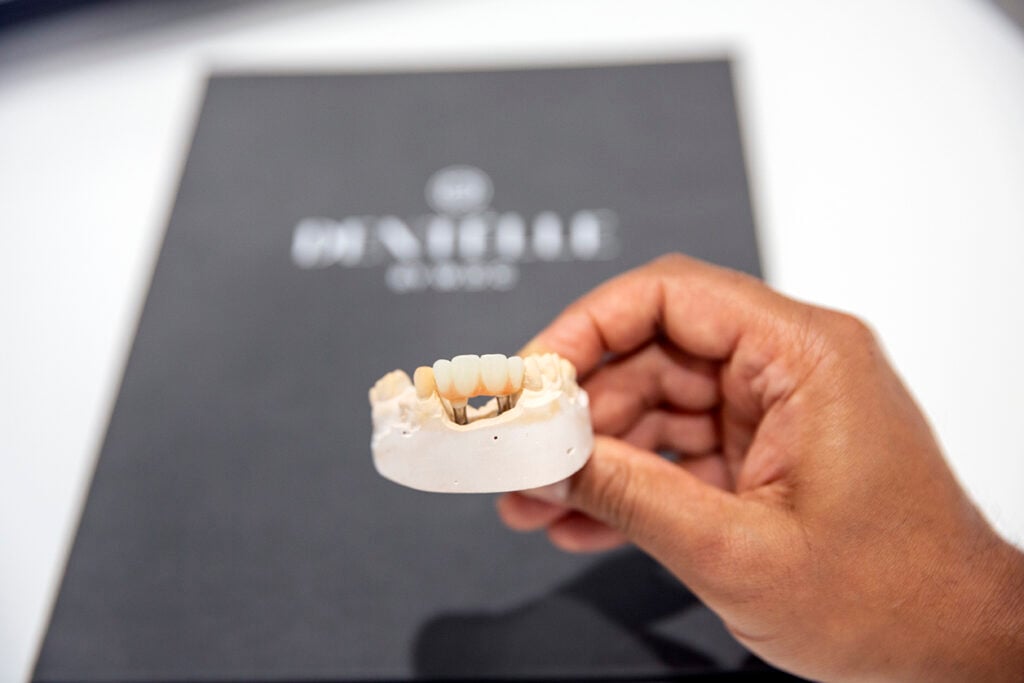
For patients with sufficient bone volume, implant-supported teeth that are fixed in position offer a more stable and durable long-term solution. This approach typically involves placing multiple implants in each jaw to support a full arch of teeth that do not need to be removed at night. Patients are able to eat, chew, and function with a level of comfort and stability that a removable denture cannot replicate. At Warragul Dental Care, Dr Anand places implants and designs the prosthetic teeth as part of a coordinated treatment plan through dental implants care.
The Overdenture Option
A middle pathway between conventional dentures and fully fixed implant teeth is the overdenture, sometimes referred to as a clip-in denture. This involves placing two implants in the lower jaw to provide anchor points for a removable denture that clips securely into place. This option works reasonably well for the lower jaw, where denture stability is typically more of a concern. For the upper jaw, a greater number of implants is generally required to achieve adequate support, and at that point a fully fixed solution often becomes the more clinically logical choice.
Book Your Implant Consultation at Warragul Dental Care
If your teeth are causing significant problems or you would like to understand what your replacement options are, Dr Anand is here to talk you through the process, the timeline, and what each pathway involves. Call 03 5614 8899 or book your consultation online today.
Any surgical or invasive procedure carries risks. Before proceeding, you should seek a second opinion from an appropriately qualified health practitioner.